
AMRs vs. AGVs: What Smart Autonomous Robots Mean for the Future of Manufacturing and Logistics
When it comes to mobile automation, one question comes up in almost every conversation: Should we be using AGVs or AMRs?
It’s a fair question, but it’s not always the right one.
Because the real answer isn’t about choosing one technology over the other. It’s about understanding your operation well enough to choose the right solution for the problem in front of you.
The Real Difference
At the simplest level, the difference comes down to how each system moves.
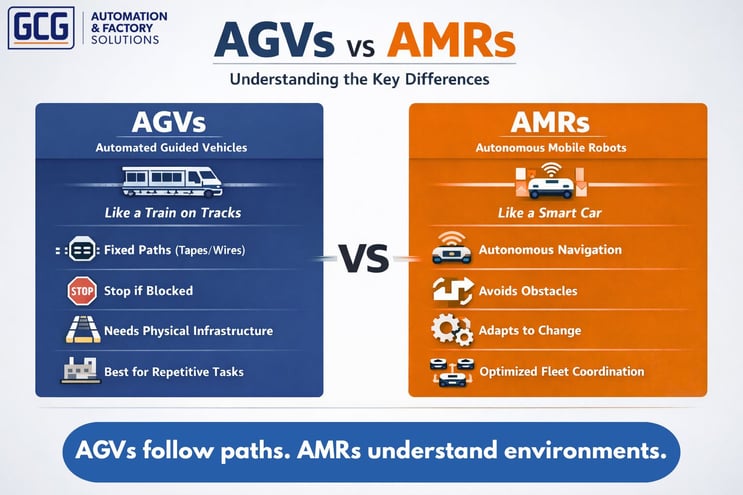
An AGV follows a fixed path like a train on invisible tracks. It goes where you tell it to go, every time, with no deviation.
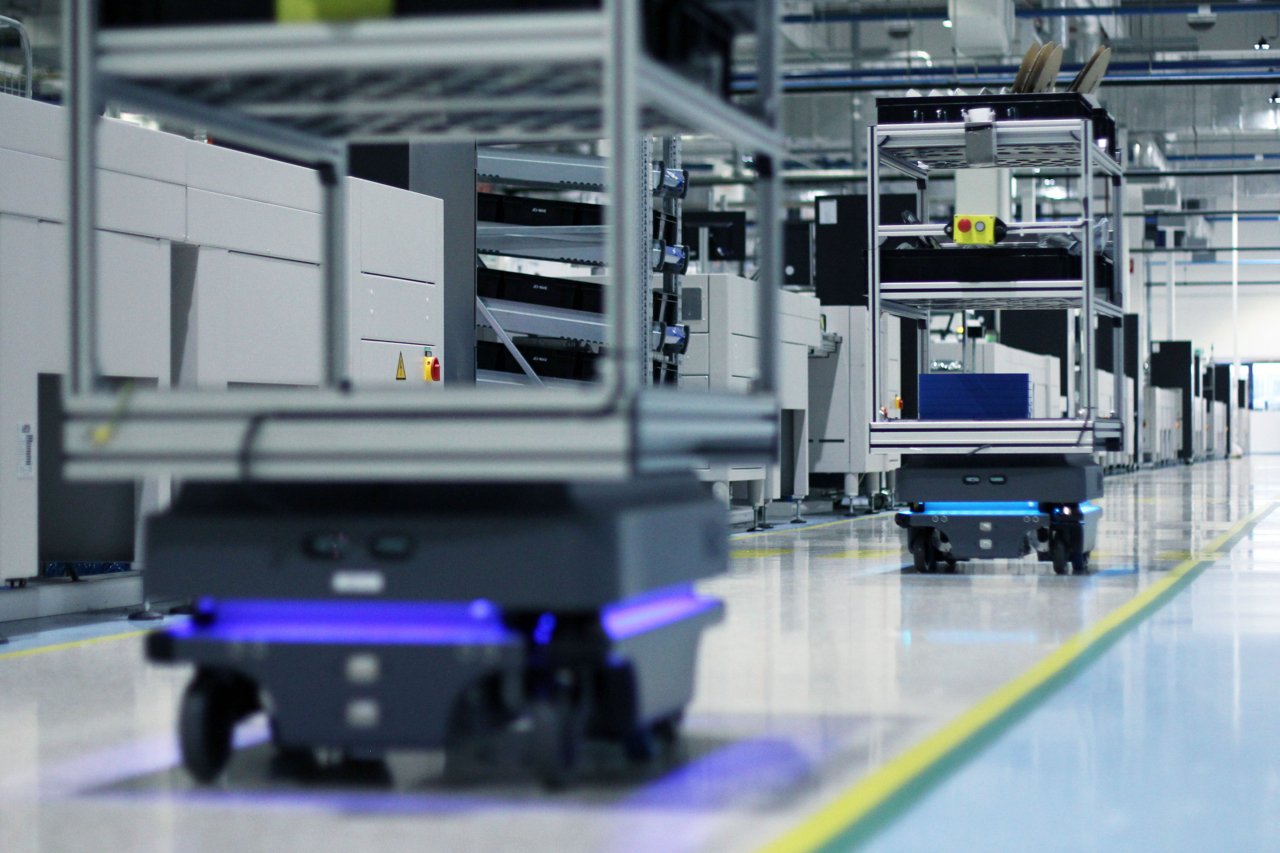
An AMR operates more like a self-driving vehicle. It has a map of your facility, knows where it needs to go, and if something is in the way (like a forklift or congestion in an aisle) it finds another route.
That distinction matters more today than it did even a few years ago.
Facilities aren’t static anymore. Layouts change. SKU counts grow. Throughput expectations increase. The “we’ve always done it this way” approach doesn’t hold up like it used to.
But in practice, this isn’t an either/or conversation.
The right answer is almost always: it depends on the project.
Who’s Exploring Mobile Robotics and Why
The companies asking about AMRs and AGVs tend to fall into a similar category:
Mid-to-large manufacturers and distribution centers—typically in the 50,000 to 500,000 square foot range. Industries like e-commerce fulfillment, automotive suppliers, food and beverage, and 3PLs come up often.
These aren’t always the largest operations, but they’re the ones feeling the most pressure.
They’re dealing with:
- Tight labor markets
- Increasing throughput demands
- Rising safety concerns
- Pressure to justify every capital investment
And importantly, they’re not starting with, “We want robots.”
They’re starting with:
- “We can’t staff this job consistently.”
- “Our line keeps stopping because material isn’t arriving on time.”
- “We’ve had too many near-misses with forklifts.”
Automation enters the conversation as a solution to a real operational problem, not a technology upgrade for its own sake.
The Biggest Misconception About “Robots”
One of the most common concerns is that robots are coming in to replace people.
In reality, that’s rarely what happens.
AMRs don’t eliminate jobs, they reallocate labor.
The person pushing a cart all day gets reassigned to something higher value like quality checks, inspection, decision-making tasks. The robot takes over the repetitive movement. The human focuses on work that actually requires judgment.
That shift is critical, especially in environments where workforce concerns and culture matter just as much as efficiency.
How AMRs Work in the Real World
Most AMRs today rely on a combination of LiDAR, cameras, and SLAM (simultaneous localization and mapping).
In practical terms:
- The robot builds a digital map of your facility
- It always knows where it is within that map
- It adjusts its route in real time based on what it sees
There’s no tape on the floor. No wires. No fixed infrastructure.
If your layout changes, you update the system in software, not by reworking your facility.
AGVs, on the other hand, rely on physical guidance systems like magnetic tape, QR codes, or embedded wires. If the layout changes, the infrastructure has to change with it, which adds time, cost, and potential downtime.
Where Each Technology Fits Best
AMRs shine in environments that are:
- Dynamic and frequently changing
- High-mix, high-SKU operations
- Shared spaces with people, forklifts, and equipment
- Seasonally reconfigured or constantly evolving
If your floor looks different in Q4 than it does in Q2, AMRs tend to deliver strong value.
That said, AGVs still have a place and in some cases, they’re the better option.
AGVs make sense when:
- Routes are fixed and highly repetitive
- The environment is controlled and predictable
- Throughput is the primary driver
- The layout is unlikely to change for years
In these scenarios, a well-designed AGV system can be simpler, more cost-effective, and easier to validate—especially in regulated environments like pharmaceuticals.
In many modern facilities, the best answer isn’t one or the other—it’s both. Fixed backbone routes handled by AGVs, with AMRs operating in more dynamic areas.
Understanding ROI (Beyond the Sales Pitch)
ROI with AMRs doesn’t follow a one-size-fits-all formula.
In most cases, a realistic payback window falls somewhere between 18 to 36 months, though it can be faster when labor costs are high and the application is clearly defined upfront.
The biggest factor in success? Clarity of the problem.
The strongest projects start with: “This specific process is costing us X.”
Not: “We want to automate.”
When it comes to discussing value, the most effective approach isn’t promising savings—it’s highlighting the cost of inaction.
- What does a line stoppage cost per hour?
- What happens when material doesn’t show up on time?
- What’s the impact of ongoing safety incidents?
Letting customers answer those questions themselves builds a much stronger business case than any generic ROI estimate.
Safety: The Underrated Driver
While efficiency gets most of the attention, safety is often what actually gets projects approved.
AMRs can:
- Reduce forklift traffic in high-pedestrian areas
- Minimize near-misses and incidents
- Eliminate repetitive strain from manual transport tasks
In many facilities, injuries related to pallet jacks and forklifts are more common than teams want to admit.
In fact, some projects move forward not because of throughput gains, but because of repeated safety incidents. When you factor in workers’ compensation, OSHA considerations, and insurance costs, the ROI conversation shifts quickly.
Safety doesn’t just support the business case; it often drives it.
How to Approach the Decision
In real-world conversations, the starting point isn’t the technology.
It’s the application.
Questions like:
- How often does the layout change?
- How much human traffic shares the space?
- What’s the cost of downtime?
- How predictable is the route?
Those answers guide the decision.
And sometimes, they point to a hybrid solution.
Common concerns like cost, complexity, or past automation failures are valid. But more often than not, those challenges come down to poor scoping, not the technology itself.
That’s why upfront evaluation matters.
What’s Next for Mobile Robotics
Looking ahead, the next evolution isn’t just better robots, it’s smarter systems.
The future is in orchestration:
- AMRs, robotic arms, conveyors, and software all working together
- Systems that reprioritize tasks in real time based on live production data
- Facilities that adapt dynamically instead of operating in silos
Two areas to watch closely:
- Mobile manipulation: combining AMRs with robotic arms to both move and interact with materials
- AI-driven perception: robots that don’t just avoid obstacles, but understand context within their environment
As these technologies mature, the scope of what’s possible will expand significantly.
Where to Start
For operations leaders just beginning to explore automation, the best advice is simple:
Start with your worst bottleneck, not your biggest vision.
Pick one clearly defined problem. Solve it. Prove the value internally. Then scale from there.
The companies that try to automate everything at once often stall.
The ones that start small and build momentum are the ones that transform their operations over time.
The Bottom Line
If there’s one takeaway, it’s this:
Stop asking “AMR or AGV?” and start asking “What does this project actually need?”
The technology is ready. The ROI is real. The opportunity is there.
Success comes down to matching the right solution to the right problem and bringing your people along in the process.
Because in the end, the robots are the easy part.